
Context
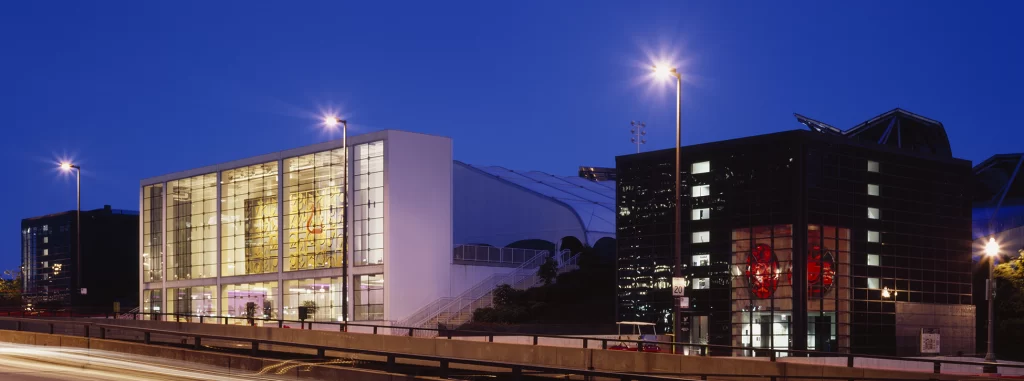
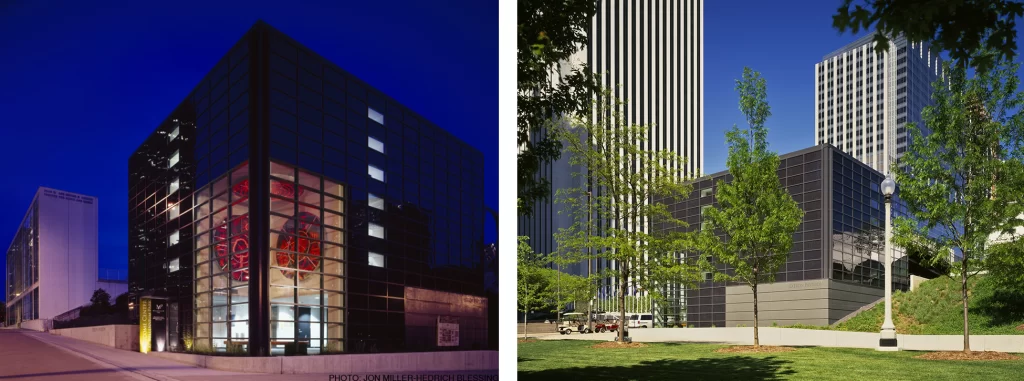
Cyrus Subawalla, while a Principal at HBRA, served as the project designer for these two pavilions. The firm was asked by the Mayor’s office to create an urban landmark that would showcase Chicago as ‘the Green Capital of the United States. A 24-acre park over a railway station was subsequently planned for public use, with three of the park’s buildings being the Music and Dance Theatre and two of the four Exelon Pavilions, all of which Mr. Subawalla was involved with.
Concept
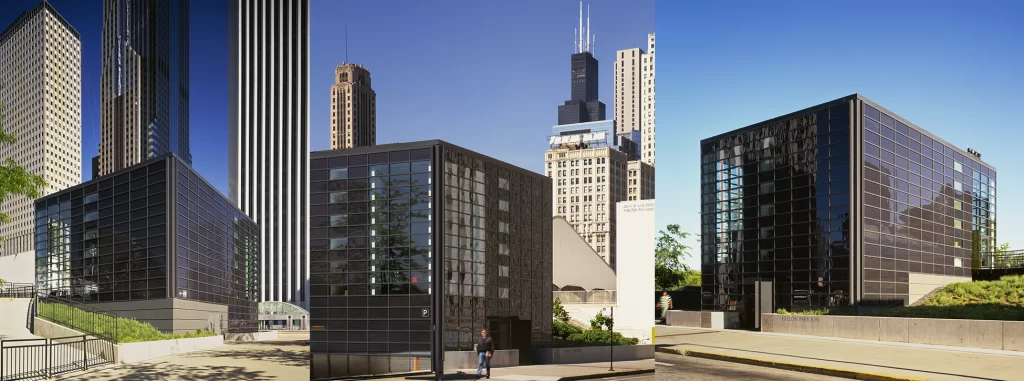
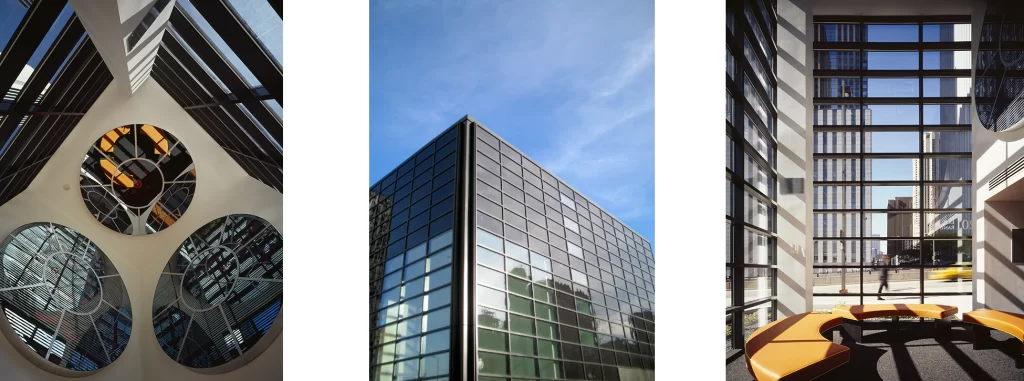
The design strategy expresses the interior functions of the building through a rigorous grid of punched openings in the facade that contrast with the large spans of glass elsewhere, a motif intended to reveal a clear distinction between served and servant space. The design also integrates custom mono-crystalline photo-voltaic cells into the double-wall system, ensuring that the convective cycle between the outer glazed and inner rated walls will cool the cells, thereby improving efficiency of the photo-voltaic panels. Finally, numerous other sustainable design features were integrated into the building, resulting in a success ratio of 95% with regard to the obtainment of LEED points.
Team
Head Partner Thomas Beeby
Gary Ainge Project Architect
Cyrus Subawalla – As Principal HBRA- Proj. Designer
Rahman Polk – Architect
Project Data
Building type: Corporate-Mixed Use-office+retail
Sustainability/LEED: LEED Silver
Location: Chicago, IL
Site Area: N/A
Project Area: N/A
Client: City of Chicago
Completion Year: 2004
Construction Cost: Withheld at owner request
Recognition: As part of AIA National Honor Award for Millennium Park.
Power and Energy Magazine 2013